
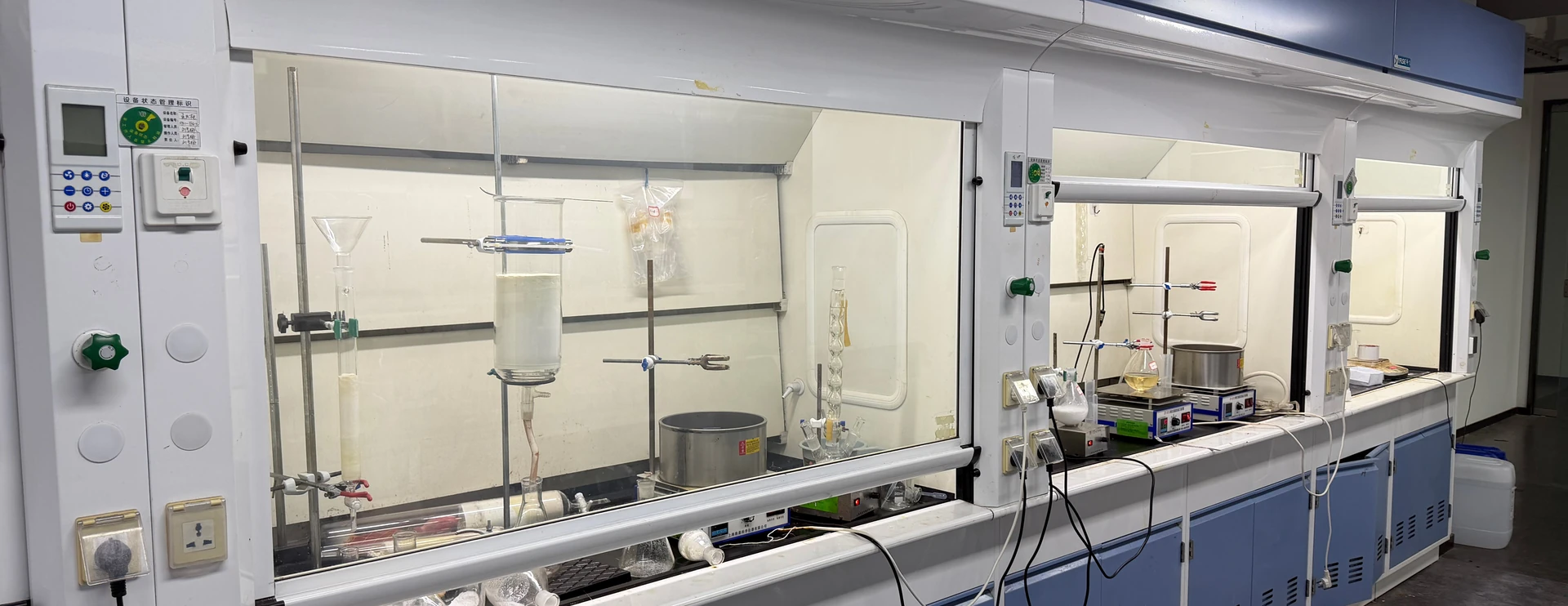
Chemistry & Process Technologies
Capot keeps building distinctive chemistry and engineering capabilities around complex molecule construction, advanced process technologies and the control of high-risk reactions. The focus covers specialized chemistry such as fluorine chemistry, chirality, complex heterocycles, nucleosides, unnatural amino acids and peptides, together with cryogenic and high-temperature operation, continuous flow, molecular distillation and the controlled execution of high-risk reactions.
Explore our technical capabilities →Specialized Chemistry Capabilities
A focus on chemical systems of high structural complexity, demanding selectivity control and synthetic difficulty, forming distinctive specialized chemistry capabilities.
Fluorinated Molecule Construction
Introduction, transformation and selectivity control of fluorinated functional groups and fluorinated structural units.
Enzymatic Catalysis and Chiral Transformation
Construction, resolution and defined transformation of chiral centers and specific functional groups through enzymatic catalysis and other stereoselective methods.
Complex Heterocycles and Fused Scaffolds
Construction of nitrogen-, oxygen- and sulfur-containing heterocycles, as well as polycyclic, fused and sterically congested scaffolds.
Nucleoside and Carbohydrate Chemistry
Protection and deprotection, glycosylation and key structural transformations for nucleosides, glycosides and multiple stereocenter systems.
Unnatural Amino Acid and Peptide Construction
Construction of unnatural amino acids, peptide fragments and related complex structures, covering chirality control, protecting group strategy and selective functional group transformation.
Deuterium and Isotope Chemistry
Synthesis of deuterated molecules and stable isotope labeled compounds with site-selective introduction.
Advanced Process Technologies
A focus on special reaction and separation technologies with a high engineering threshold, strengthening control over temperature, heat transfer, residence time and complex separation sequences.
For temperature-sensitive and highly reactive systems, some processes operate at approximately −100°C to −70°C.
For systems requiring elevated reaction temperatures, controlled ramp-up, holding and cooling extend the processing window.
Continuous flow process development and validation centered on heat transfer, mixing and residence time control.
Gentle separation and purification of high-boiling and heat-sensitive materials using short residence times and lower operating temperatures.
Reduced-pressure rectification and high-vacuum separation for systems with close boiling points, difficult separations or a need for lower operating temperatures.
High-Risk Reactions and Controlled Processing
For chemical processes with high reactivity, marked exotherms, toxicity, corrosivity, pressure or special handling requirements, Capot carries out controlled operations through suitably equipped assets, process control and EHS management.
From Chemistry to Production
Chemistry Selection
Choose the appropriate chemistry and transformation strategy.
Process Development
Optimise reaction conditions, control strategy and isolation process.
Scale-Up Validation
Validate the chemistry and process under larger-scale conditions.
Commercial Production
Transfer the optimised process into stable manufacturing.
Technical Evaluation & Project Support
Technical Evaluation
Assessment of the target structure, reaction requirements, technical feasibility and project scale.
Process & EHS Evaluation
Assessment of process conditions, reaction characteristics and applicable engineering controls and EHS requirements.
Technology Transfer
Support transfer of developed chemical processes into pilot and production stages.
Advancing a challenging chemistry project?
Tell us the target molecule, reaction requirements and project scale. The Capot team will evaluate the project and discuss the chemistry and process approach that fits.
Discuss your technical project →